The Bad Review

So, I recently had my, so-far, unpublished, book reviewed, and it wasn’t good. The review, I mean; my book is good. Anyway, that’s life, right. It’s like the last haircut I got. My usual barber died so I found a new one, a woman. I had to pay twice as much this time, and it wasn’t that good. It’s like she had just got out of Barber College—but didn’t graduate; they kicked her out. Anyway, what are you gonna do. That’s what we have hats for.
All writers have to go through this, even the greats; and I (not great) have since the 90s. There’s actually a process you go through, six stages. They are:
Denial: What the hell is this? She can’t be talking about my book? But the part she quoted… Yeah. But there’s no context. And the overarching story, not more than a few words about it. And her focus… Every great work has a few bloopers, some things the editor missed. This can’t be right. Maybe this is her first draft? I better email the site admin.
Anger: It is tough dealing with a negative review. To paraphrase something boxing champion Mike Tyson said, ‘some writers think they’ve written a great novel until they get punched in the face with a negative review.’ It hurt and was uncalled for. And I damn well have the right to be angry.
Bargaining: This review, if you think about it, doesn’t determine my book’s worth. It is only the opinion of one person out of the four billion on the planet, and they didn’t like my book. Fair enough. But that leaves 3.99999 billion others who might. And they, a few of them, will write positive reviews of the work.
Depression: But… maybe not. Maybe there will be no more reviews, bad or good. Period. Maybe only this one, standing before my novel like a gravestone, its dismissive words etched in limestone, already a patina of green algae spreading across it. Maybe I’m just wasting my time writing. I put my best into this fucking book and the ten that preceded it, and I get a shit review like that? Fuck! I’ve been trying to live a long healthy life, to serve up my oeuvre to my thankful readers well into the future. But now I think I’ll just go out and buy a carton of cigarettes, unfiltered, and a couple fifths of whiskey, bottom shelf, plastic bottles, the kind infused with used diesel oil—but from long-haul trucks, the real deal—the kind that transports you into dark worlds where people hiss like snakes and it’s always cold and damp. Why me? Why the fuck me? After all the hard work I’ve put into my writing over decades… The world sucks.
Acceptance: Well, these kinds of reviews (negative ones) only affect writers who, rightly, believe their work to be stellar, fabulous, timeless and wonderful. Not writers who think their work is ‘good enough’ or passable. (Those writers should find another line of work.)
Death: Well, not the real one, but a literary allegorical one. Really. And I have noticed that since the review my fingernails have been growing five times faster than normal, along with my hair, what’s left of it, and the days have lost their sharp glassy edges, instead segueing one into another seamlessly, while all around, drawn curtains, and I’ve no appetite, and hear no sound, except the occasional creak from the wood frame of this old broken down house as a gust of wind slams into it, and the house cats—impatient with my late risings (or no risings)—slam dancing on the bed to signal their growing hunger…
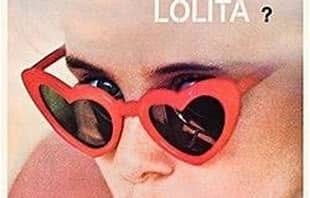
Sorry to go on, but speaking of going on, I finally got around to watching Stanley Kubrick’s movie, Lolita. I’m talking about the original. I saw it on Turner Classic Movies (TCM) on DIRECTV. TCM and three other channels are the only reasons I still subscribe to DIRECTV; the four hundred other ones are just Styrofoam peanuts to me, there to fill out the list and make me think I’m getting a great deal.
I never read Lolita. I know; I know… but I have read other Russian novels: Fyodor Dostoevsky’s Crime and Punishment, and Leo Tolstoy’s Anna Karenina and War and Peace. And, as everyone knows, Kubrick was a masterful director, and if he turned Vladimir Nabokov’s novel into a movie, you know it’s worth watching.
It’s long and I watched it over two nights. Kubrick put his mark on it, did it his way, which is what great creators do. In art, there can only be one set of hands on the controls, just like in a marriage, only one decider, and that is the stronger or more cunning of the two, usually the woman.
First off, Kubrick chose to film Lolita in black and white. I think this was done to lessen the lustiness that glorious technicolor would elicit in the film (especially when the camera eyeballs Lolita). To further turn-down the sexual temperature, Kubrick made Nabokov’s Humbert Humbert’s feelings toward Lolita more about the desperate love, yes, love, of an older man for a startlingly beautiful teenage nymphet, and less about lust. Impossible, you say, but Kubrick pulls it off, I believe, mostly by what he shows and what he chooses not to show. He likely did this to bring in more traditional viewers and less lascivious ones, who would likely be bored with the lack of skin shots. Another choice Kubrick makes is to render the novel—that most said could not be filmed, too risqué—was in his casting.
Renowned actor James Mason played Humbert. Mason had long been a leading man, but at the time of filming, was obviously aging. You can see it in his receding hairline, and also in Lolita’s eyes. Played by the beautiful, new (at the time of the film’s making) actress Sue Lyon, Lolita sees Humbert’s neediness written in wrinkles and the fading color of his eyes—and knows she holds all the cards. The great Peter Sellers plays Quilty, a mystery man, and according to insiders, almost steals the show from Mason. Shelly Winters rounds out the cast. Although Winters was a blonde bombshell when she came on the movie scene, I’ve noticed, having been a subscriber to TCM for a dozen years, that she eventually was often cast as a sort-of beta woman, past her ‘sell-by’ date, the needy woman men could easily have, but rarely wanted. (Boy, am I gonna get it!) Not a raving beauty in her post 20 years, with a few extra pounds, she was a great actress, sort of like a female ‘Marty,’ the role played touchingly by Ernest Borgnine in the classic movie of the same name.
Well, there you have it, the bad review. Actually, I think it’s a good one. And the movie is great.
Later.