Being Here…

I know many of you, like me, are swamped every day with stories and essays to read. And many of us don’t have the time. So I’ll keep this one short, a homage and a rant, but a mild one.
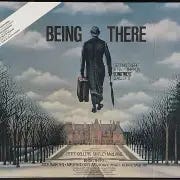
I just rewatched a wonderful movie last night, Being There, directed by Hal Ashby and based on the novel by Jerzy Kosinski, starring British film actor, Peter Sellers. (We used to have a dozen or so great film actors, but now, for some reason, we seem to have only one, Tom Hanks. What’s up with that?)
If a movie as wonderful as Being There was made today, the H-wood hacks and studio money grubbers would be braying for at least two more sequels. Maybe a contract for a seven-movie series. Kind of like Harry Potter. (I’m not knocking J.K. Rowling, by the way; I think she’s a wonderful writer; I just have a different opinion about series.)
Today, as you know, it’s all about series. As a writer and a reader, except for a few cases, I prefer one-offs, even though I wrote a series back in the mid-90s. After Calling Crow was published, my agent and publishing house editor requested a follow up or series. I gratefully agreed, receiving a contract to write two more (Flight of the Crow and Calling Crow Nation) over two years, which I did. But they wanted me to write more in that vein. (Frontier Fiction, a vein which was at that time still new and not yet highly popular). Some series writers succeed magnificently at this, like the great Terry C. Johnston. But I wanted to explore other lands, cultures, times, and planets. So I parted ways with my agent and house. Or, more likely, vice versa. Maybe that was a mistake, or maybe not.
Back to Being There…
Jerzy Kosinski was a great writer (The Painted Bird, Steps). A Polish Jew, he was born in 1933 in German occupied Poland. Like all great writers, he ‘lived’ a life, making his way in a cruel dangerous world, unlike many, not all, of today’s untested but connected MFA writers. In Kosinski’s last work, Being There, there’s so much story within the story. Chance, or ‘Chauncey Gardiner’ as he becomes later, is a gardener for the unnamed ‘Old Man.’ The ‘Old Man’ was there from ‘the beginning,’ from the moment Chance started paying attention. The Old Man had a garden he gave to Chance to husband. (Sounding familiar?) At some point the Old Man went away (died) and Chance was cast out of his garden (by a couple of lawyers; fits, doesn’t it). Chance goes out into the dysfunctional dangerous world—a ghetto in Washington D.C. Miraculously, Chance is taken in by Eve, the wife of another ‘Old Man,’ mega-wealthy investor and political kingmaker, Benjamin Rand, Ben, who is slowly dying of a rare disease.
This subtly satirical story is about big media and their lust, not for truth, but for ‘sound bites,’ and political gamesmanship. But mostly it is about loss. Chance, slow as he is, learns about loss. He lost his first master—or maybe father, ‘the Old Man,’ and at the end of the story experiences another loss.
Chance is mildly retarded. Yes, I can use the term; it was not a slur when it came into usage. It was a medical term and simply meant slow. Furthermore, I had a beloved brother who was retarded, much like Chance. One of the things he showed me was that people like him were, many of them, innocents, and some seemed almost angelic. (Were they put in this world to watch us? To try us, and to test us? I wonder.)
There’s a great scene at the end of the movie—pay attention. I never saw it the first time I watched the movie, but this time it raised the hair on the back of my head. Define it as you will, but like a lot of other things about this movie (and, or course, the novel) it will have you thinking about yourself and others, how we communicate or don’t, and about this life and what we make of it.